Our two-day Introduction to Lost Wax Casting workshop in Albuquerque brought students to Meltdown Studio for an immersive jewelry-making experience. Over the weekend, students learned to carve original wax models, prepare casting trees and investment molds, and explore the vacuum casting process. They transformed their own designs into one-of-a-kind metal rings, sculptural pendants, and small figures while learning the essential stages of lost wax casting, from wax carving to metal finishing.
Some jewelry-making processes feel a little like magic. Lost wax casting is one of them. You begin with a piece of wax, shape it into something entirely your own, and through a series of careful steps, transform that small model into a lasting piece of metal.
Starting with an Idea
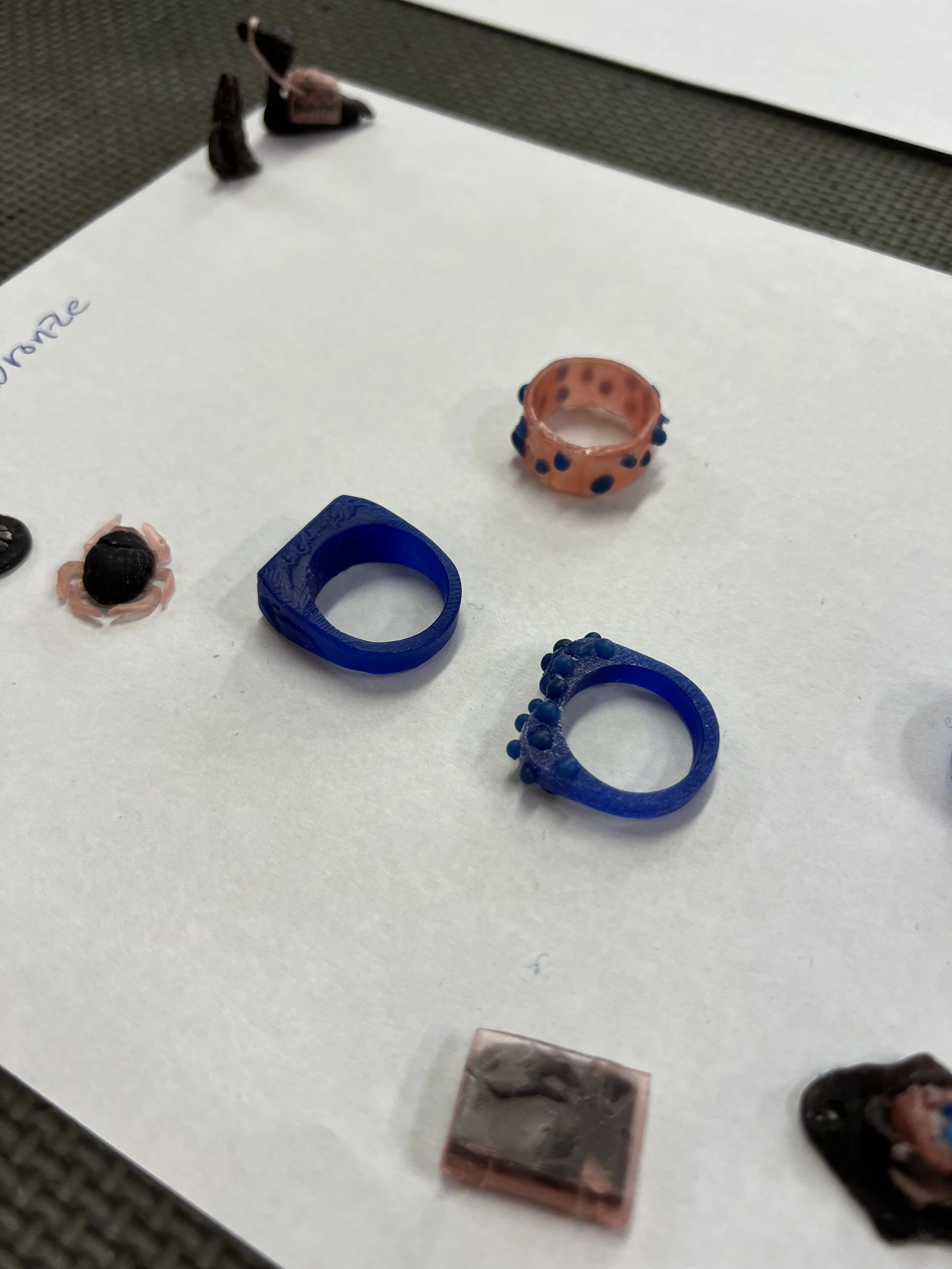
The first part of the weekend was all about imagination and experimentation. Students worked with colorful carving wax, shaping and refining their ideas by hand. Some explored ring designs, while others created more sculptural forms and playful little figures.
One student proudly held up a collection of colorful wax models, showing just how much personality could come through in these early designs. Around the workbenches, everyone approached the material differently. Some focused on small details, while others experimented with more organic shapes and textures.
That is one of the things we love about lost wax casting. It gives students room to create forms that might be difficult to make using traditional fabrication techniques.
Learning the Details at the Bench
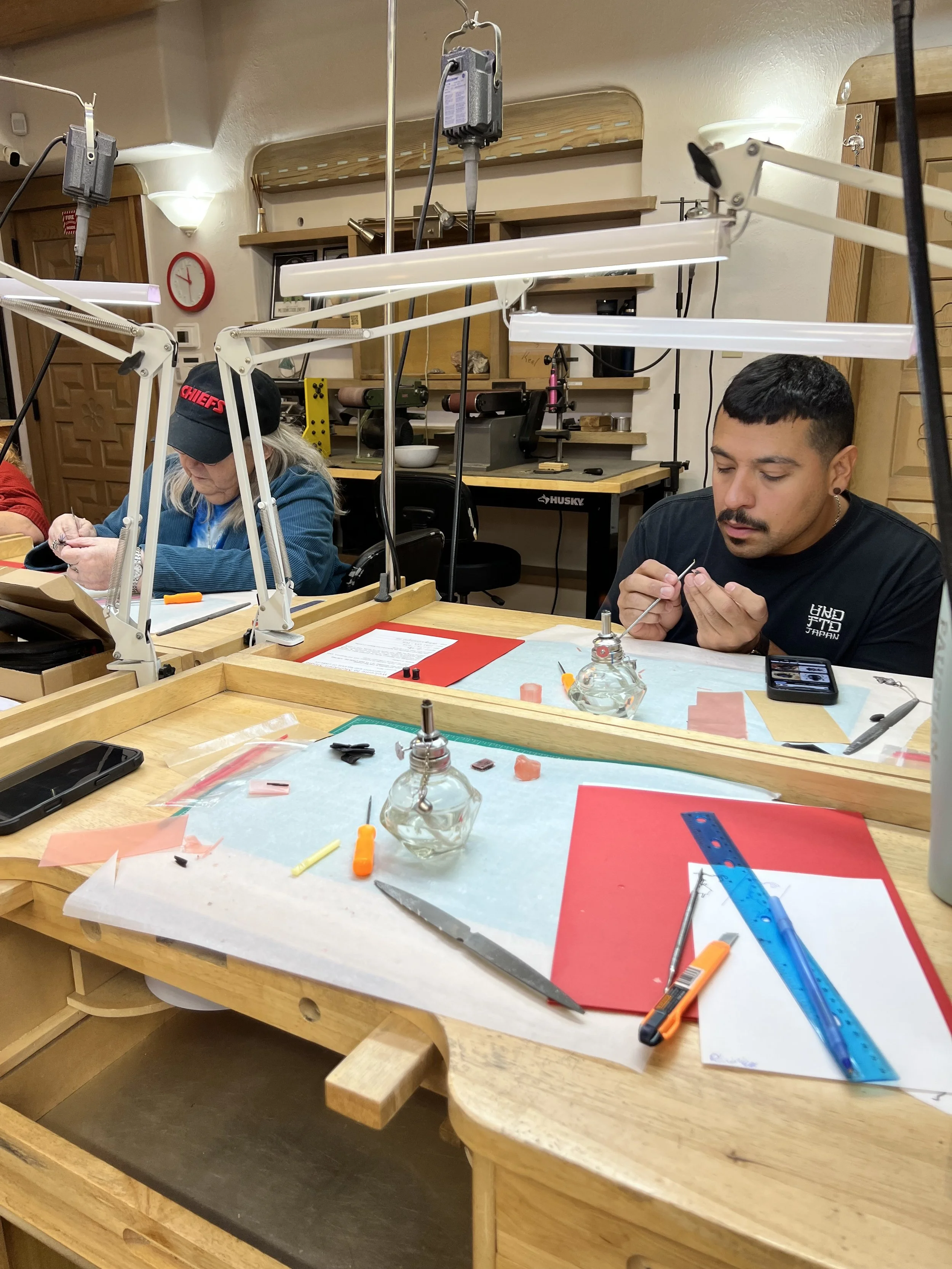
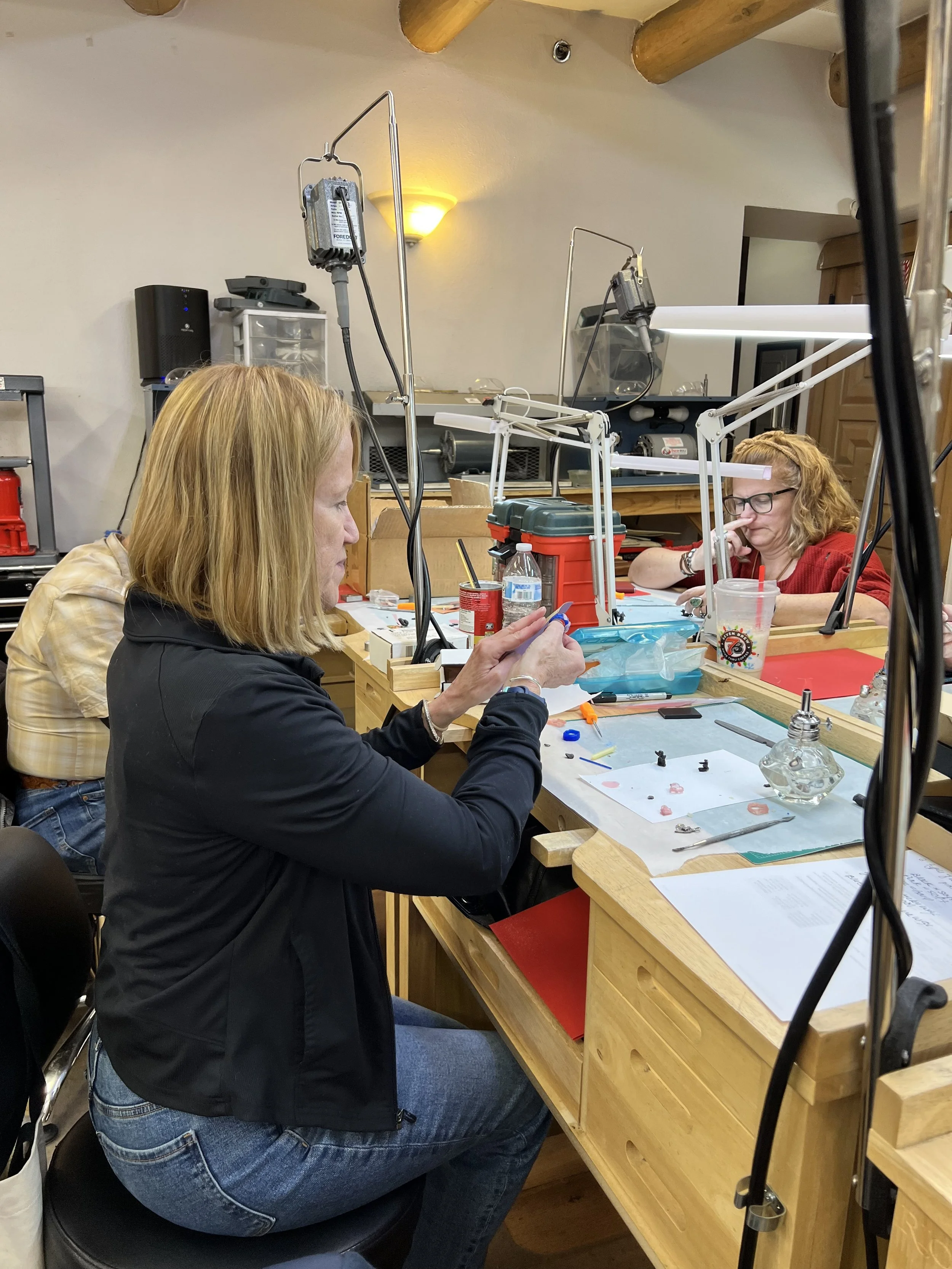
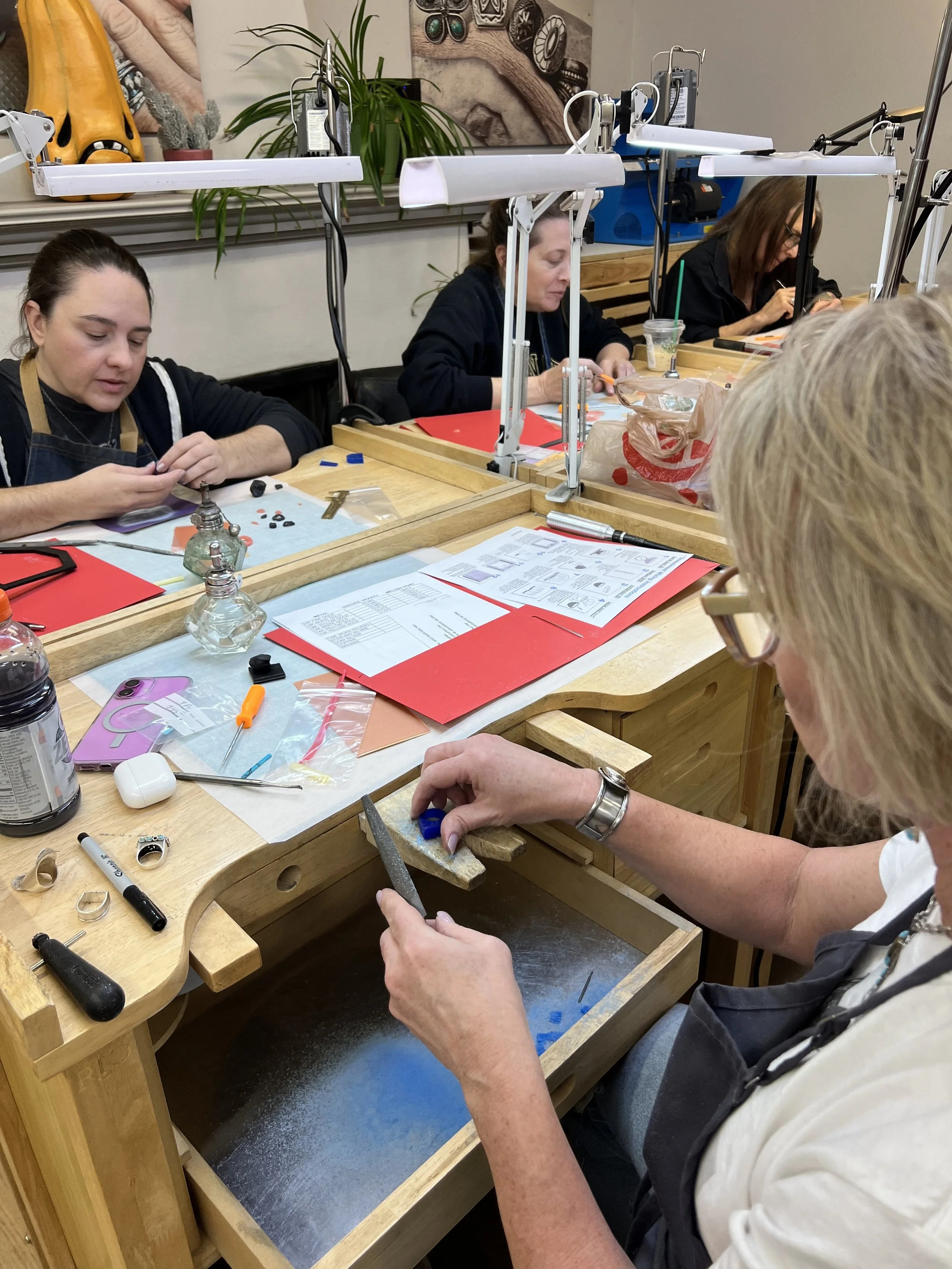
As the wax models developed, students settled into the careful work of carving, shaping, and refining. Under the workbench lights, they used small tools to bring their designs into focus, checking proportions and adjusting details along the way.
There was plenty of concentration around the studio. One student leaned in closely over a tiny model, while another carefully worked on a blue wax ring. Across the benches, students compared their progress, studied their forms, and made thoughtful adjustments.
The projects were wonderfully varied. Alongside rings and abstract shapes, students created miniature animal-inspired figures and other sculptural designs. Seeing these different ideas take shape side by side was a reminder that there is no single way to approach a casting project.
From Wax Models to Metal
One of the most exciting parts of lost wax casting is understanding what happens between the wax model and the finished metal piece.
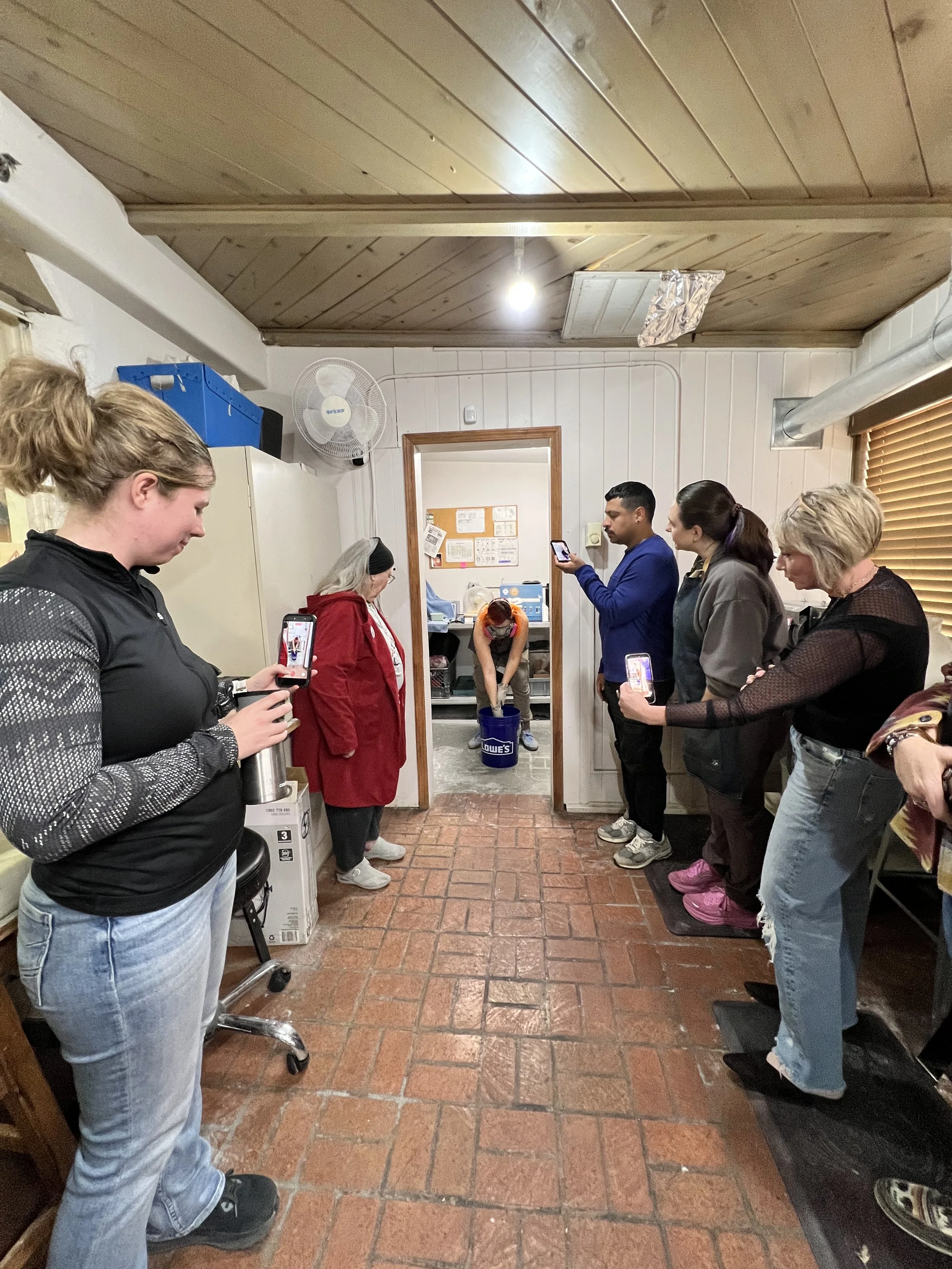
During the workshop, students learned how to prepare their models for casting, including arranging them on a casting tree and preparing the investment. The wax is later burned out, leaving a space inside the investment mold for molten metal to fill.
It is a process that requires planning and patience. Every small model needs to be prepared with care before the casting stage, and the details of that preparation matter.
The transformation is remarkable. The original wax is no longer there, but its shape and details remain in the metal.
The Reveal: A Collection of One-of-a-Kind Castings
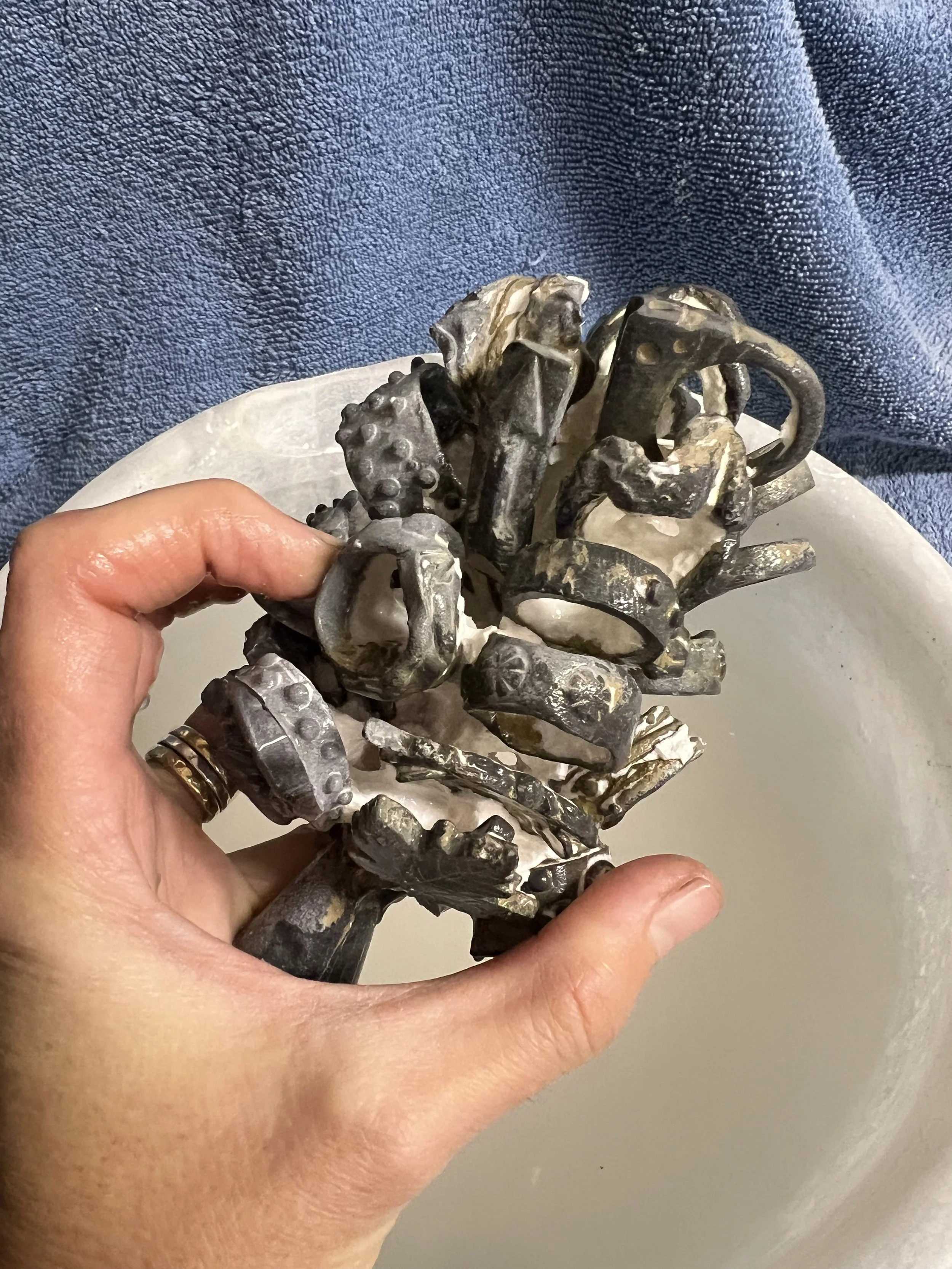
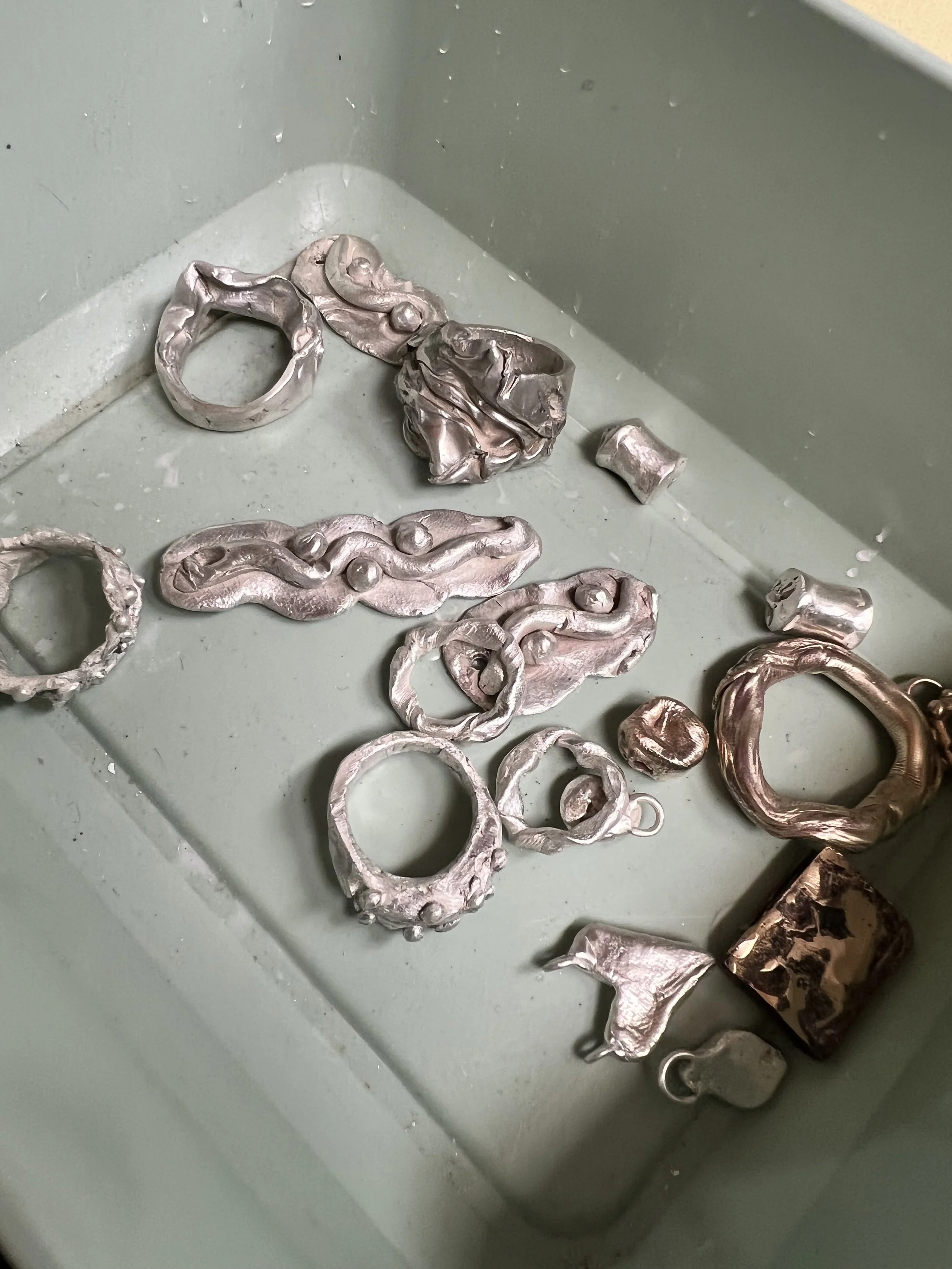
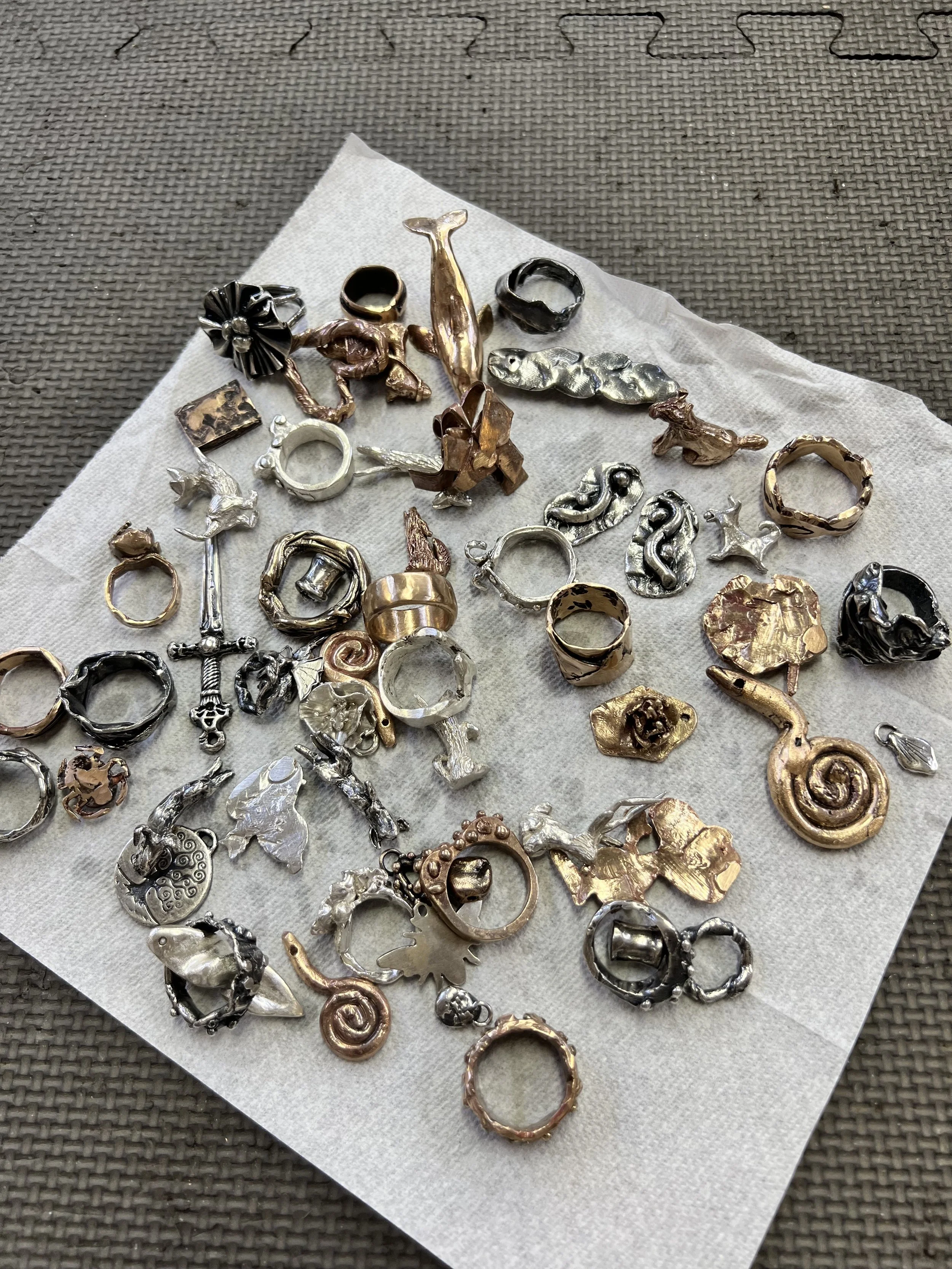
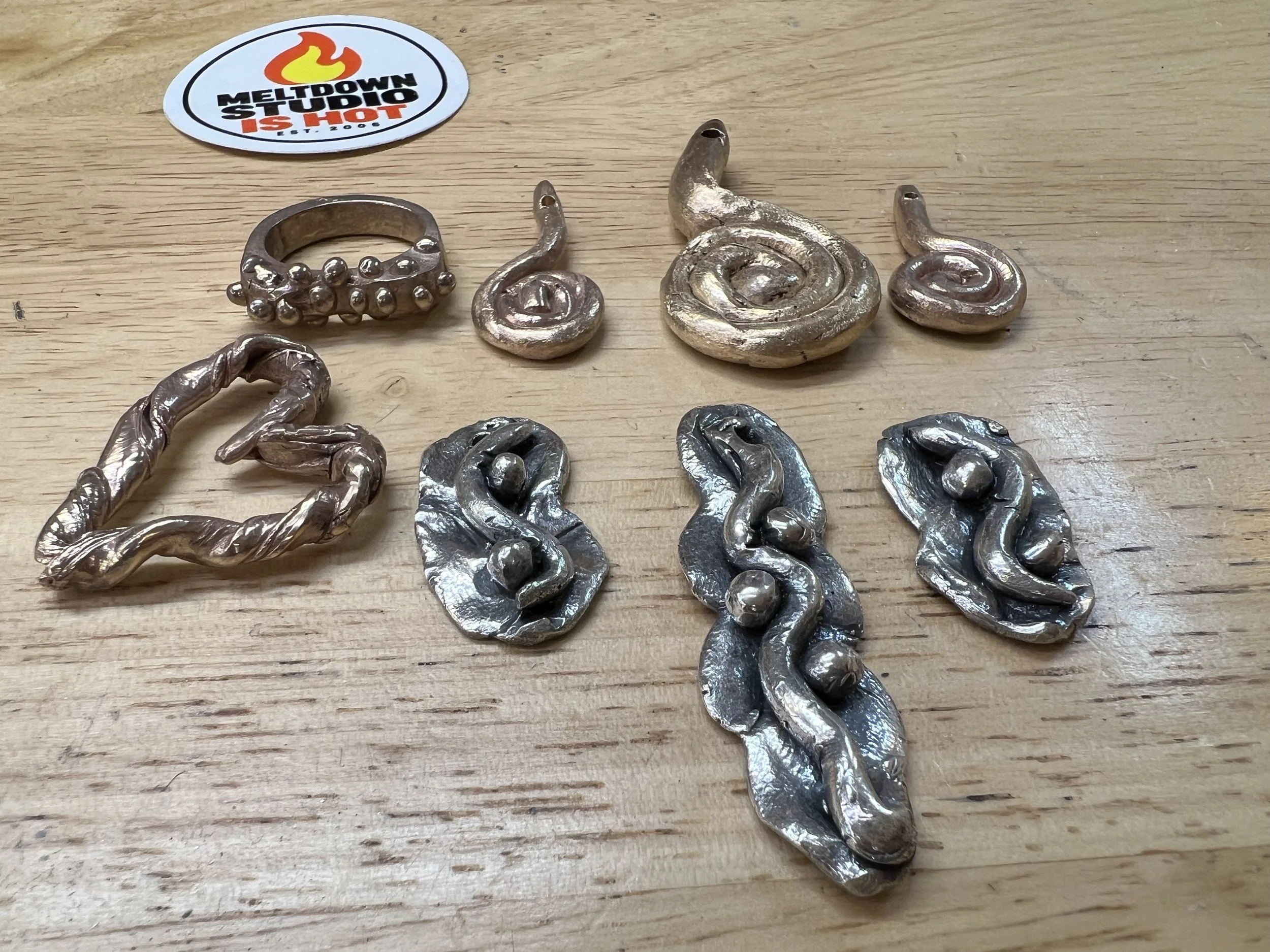
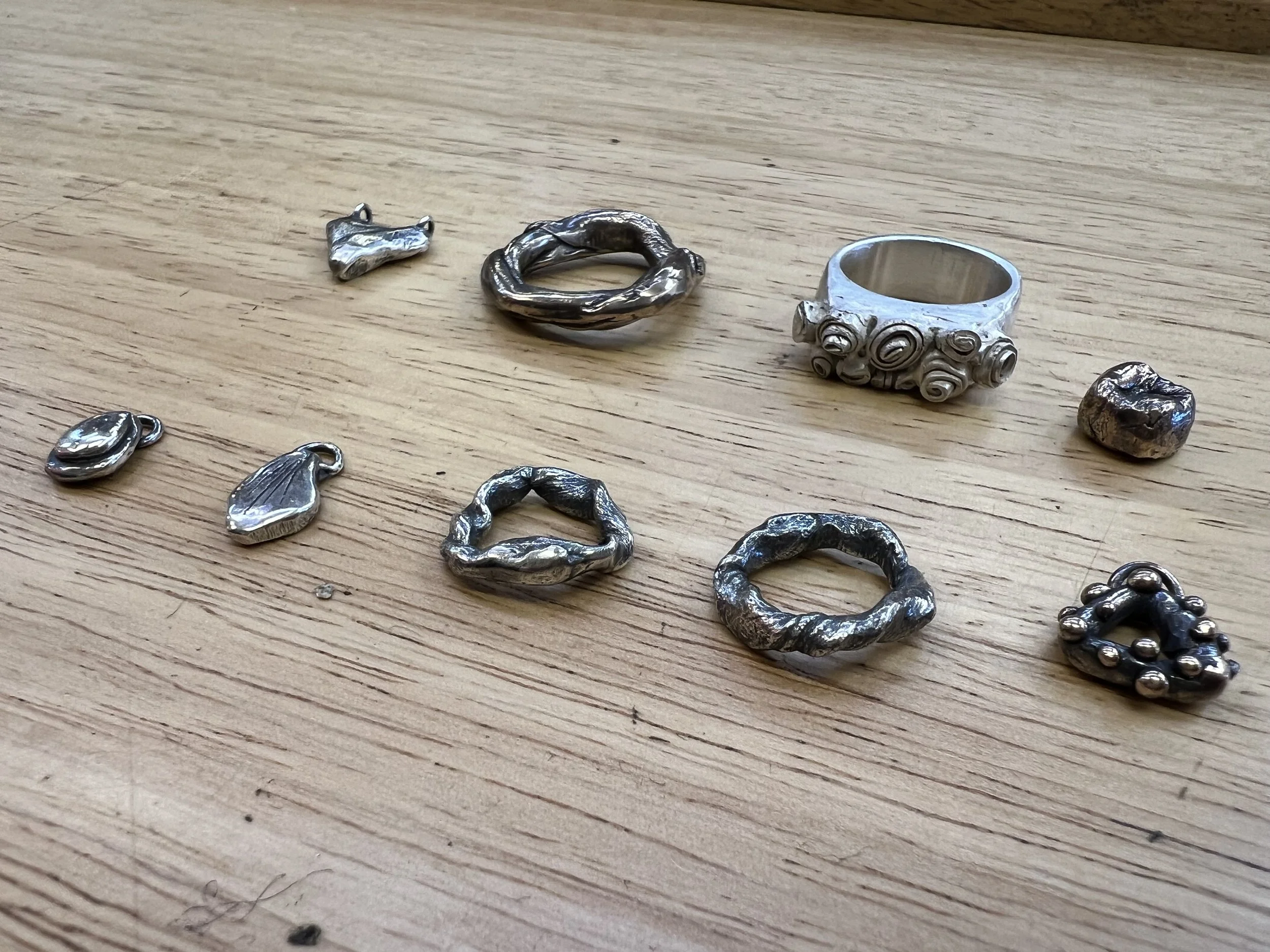
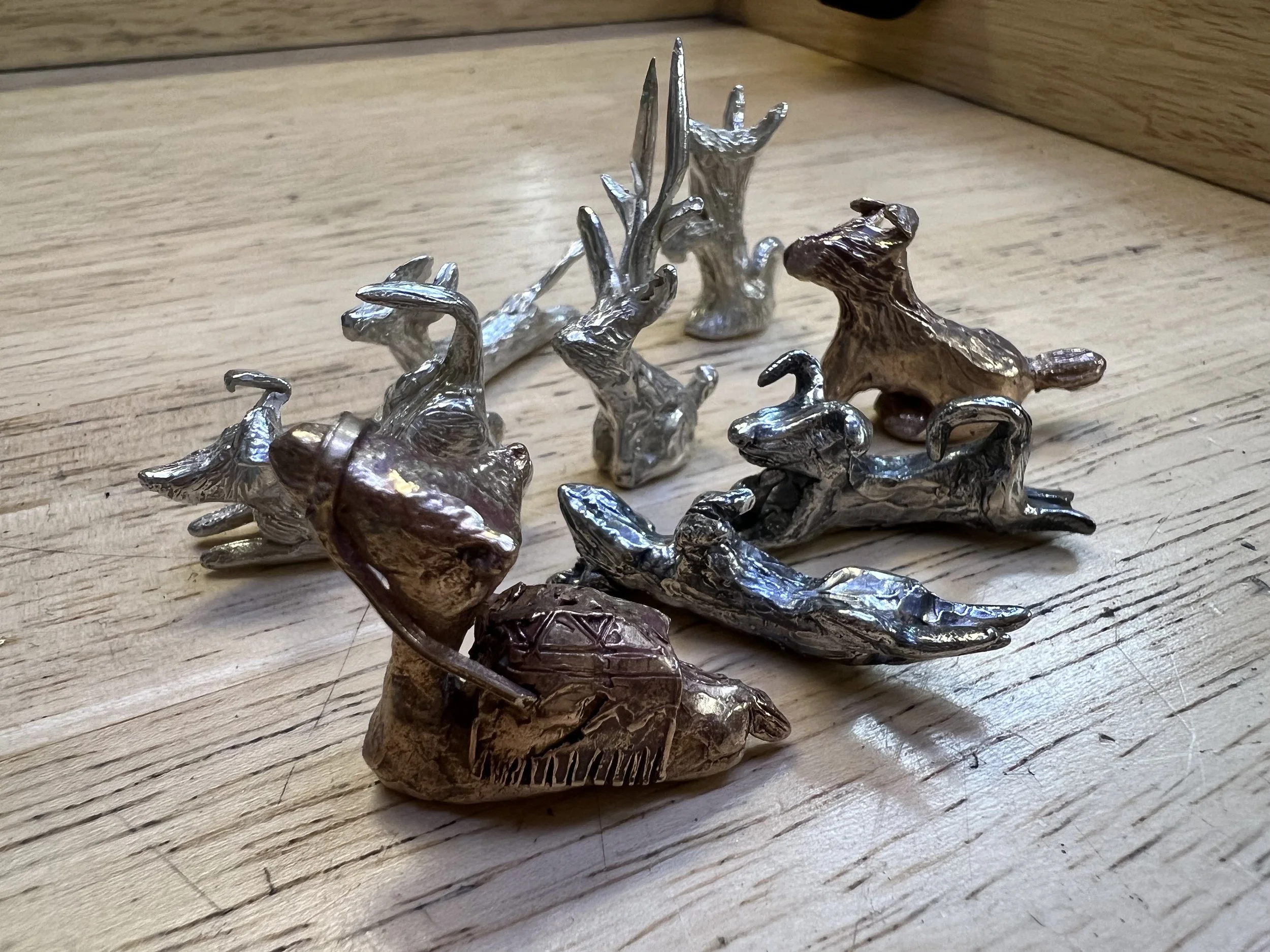
Seeing the finished castings together was a highlight of the weekend. What began as colorful wax models had become an assortment of silver-toned and warm bronze-colored pieces, each with its own shape, texture, and character.
There were rings with irregular, organic forms, sculptural pendants, textured bands, and playful designs. Some pieces had flowing lines and raised details, while others featured small decorative elements or more unusual silhouettes.
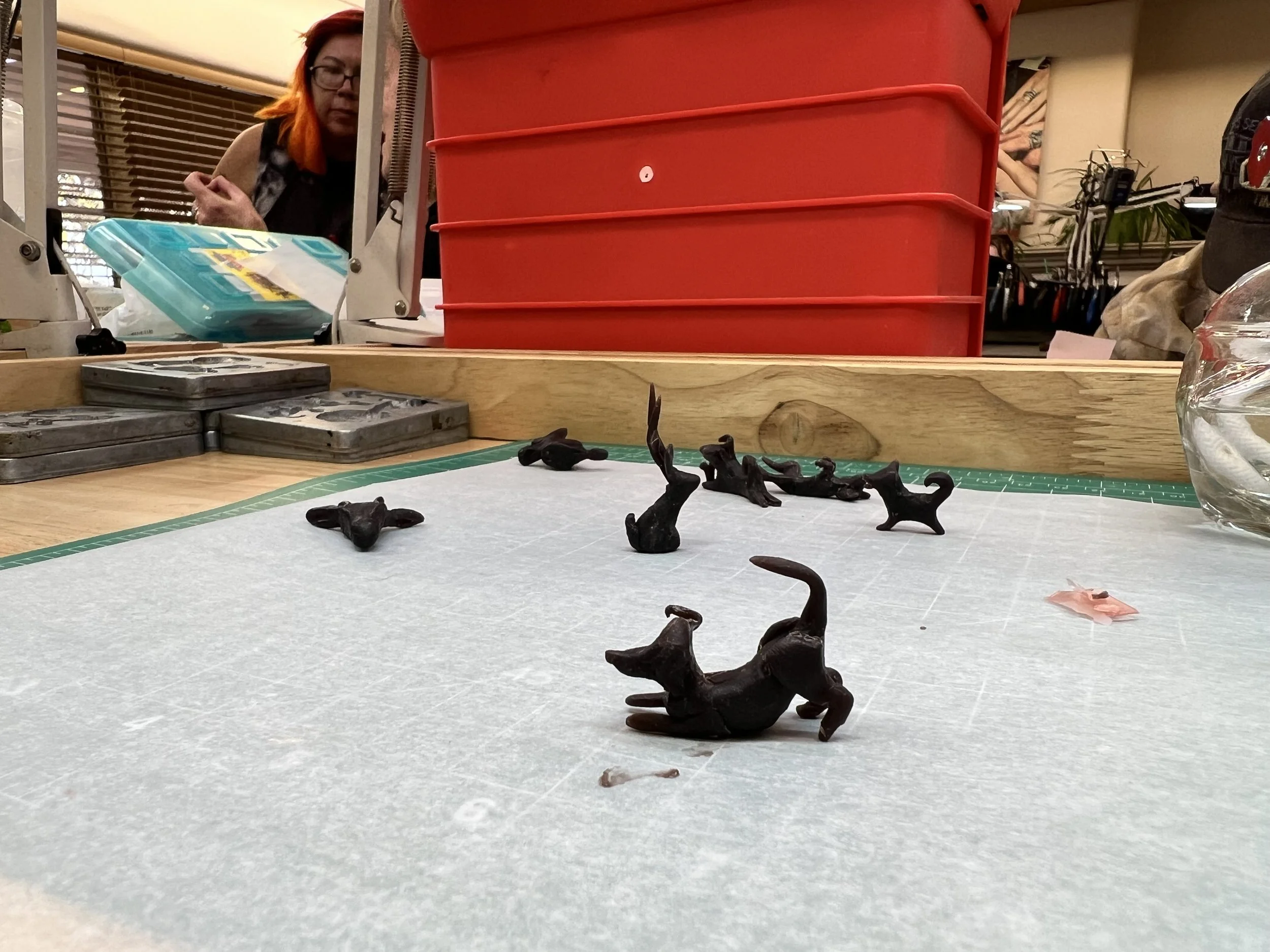
A group of finished castings showed just how different the students' ideas had been. One collection included delicate animal figures, while another displayed rings, abstract forms, and small sculptural pieces. The variety made the final results especially fun to look through.
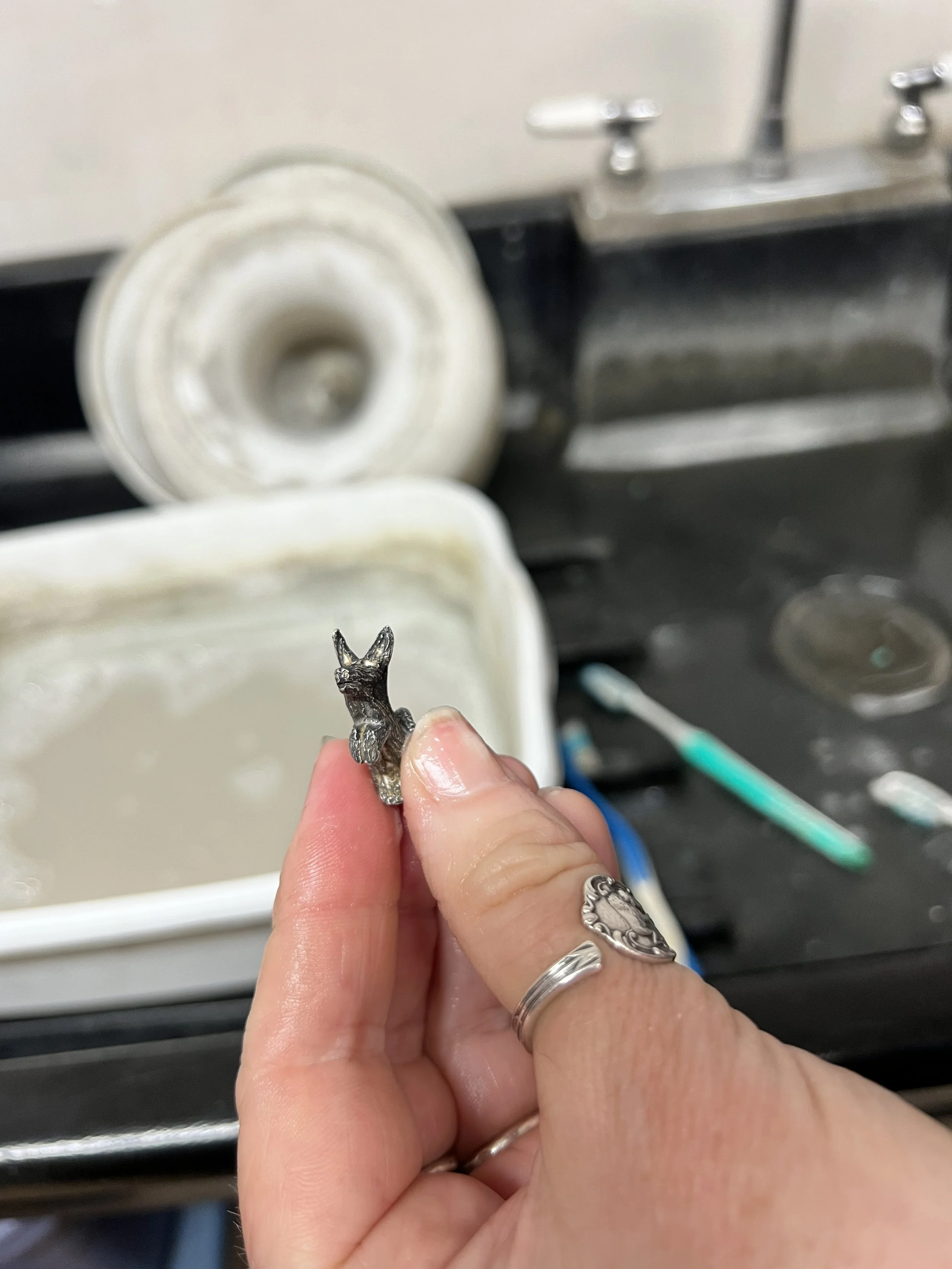
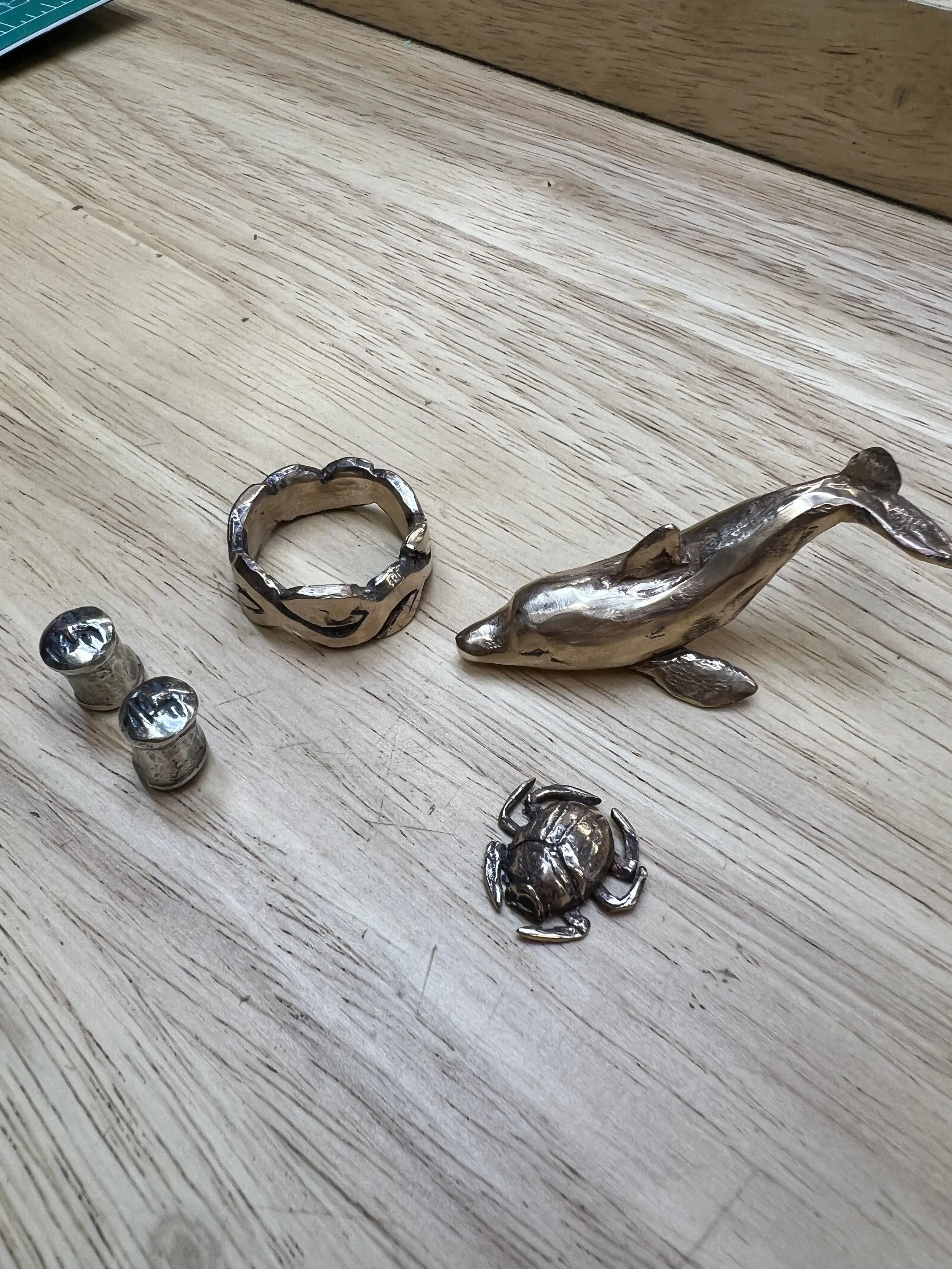
A few pieces were particularly eye-catching. A tiny animal figure was held up for a closer look, while another collection included a small sealife-inspired form, a crab, and a ring with a textured surface. There were also intricate organic shapes that looked almost like little sculptures.
The Work Continues After Casting
Casting is a major milestone, but it is not always the final step. The metal pieces still need attention at the bench. Students explored how to clean up their castings, refine surfaces, and use hand tools to bring out the details.
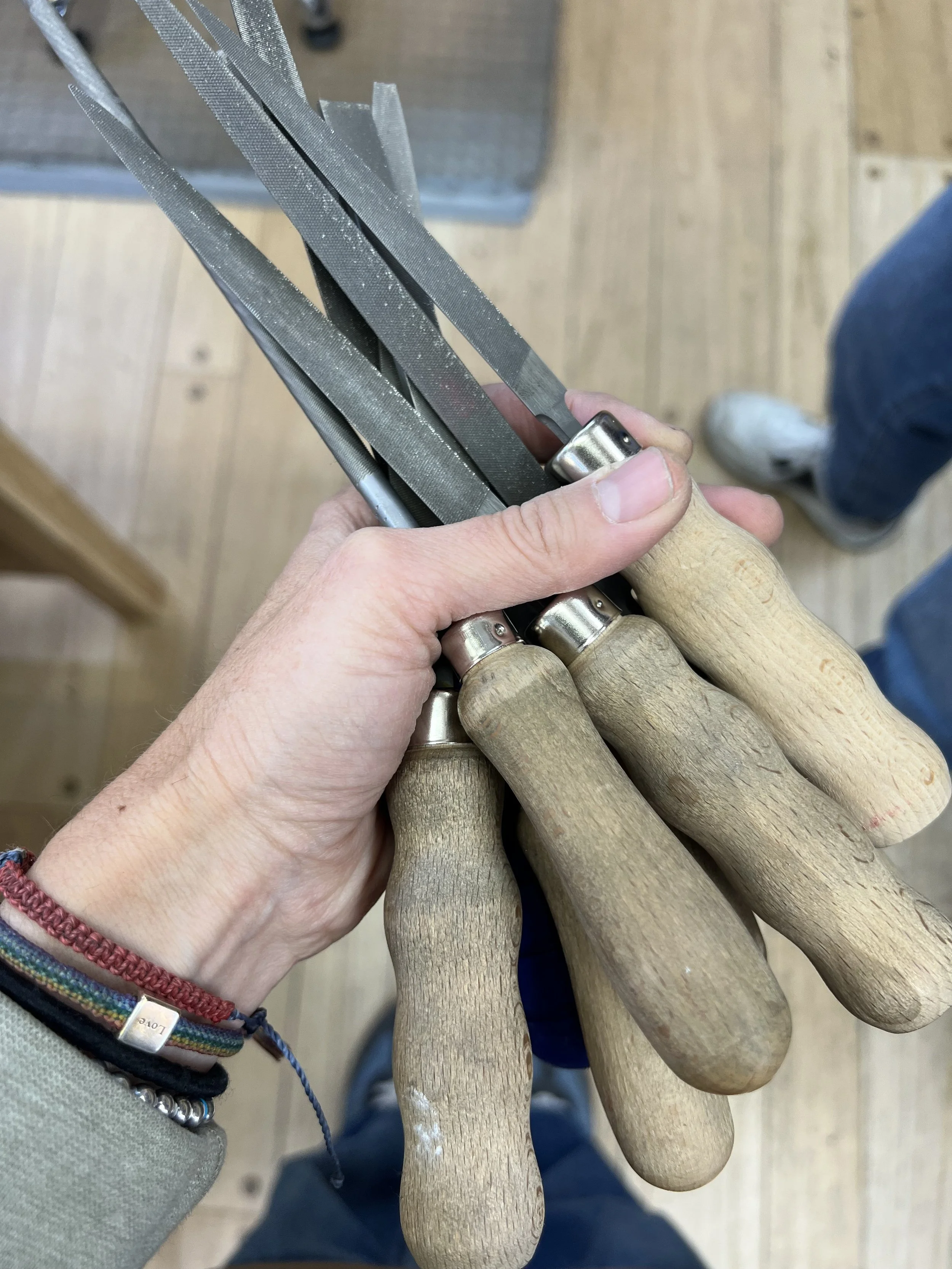
A handful of files in different shapes and sizes offered the tools needed for this finishing work. As students handled their new metal pieces, they could begin to see where additional refining and polishing would make a difference.
The finished pieces showed the range of possibilities offered by the process. Some had a soft, sculptural look, while others had bold textures and distinctive shapes. A few designs were ready to catch the eye just as they were, while others offered room for more finishing and personal touches.
A Weekend of Creativity and Discovery
Over two days, students experienced the many stages of lost wax casting, from shaping wax by hand to understanding the preparation and casting process and seeing their designs reappear in metal.
What made the workshop special was the individuality of the work. No two collections looked alike. Every student brought a different idea to the bench, and the final castings reflected that creativity.
Thank you to everyone who joined us for this Introduction to Lost Wax Casting workshop. We loved seeing your ideas develop, watching the transformation from wax to metal, and sharing a weekend filled with learning and experimentation.
Keep Exploring Jewelry Making at Meltdown Studio
Curious about trying a new jewelry-making technique? Explore our upcoming jewelry making classes in Albuquerque to find your next project.
You can also browse our special event classes at Meltdown Studio for more opportunities to learn something new at the workbench.
Ready to try something new at the workbench? Explore our upcoming classes and find your next creative adventure at Meltdown Studio!