Lapis Lazuli: The Alternative September Birthstone
When you think about September birthstone jewelry, sapphire is probably the first stone that comes to mind. But there is another beautiful option worth knowing: lapis lazuli.
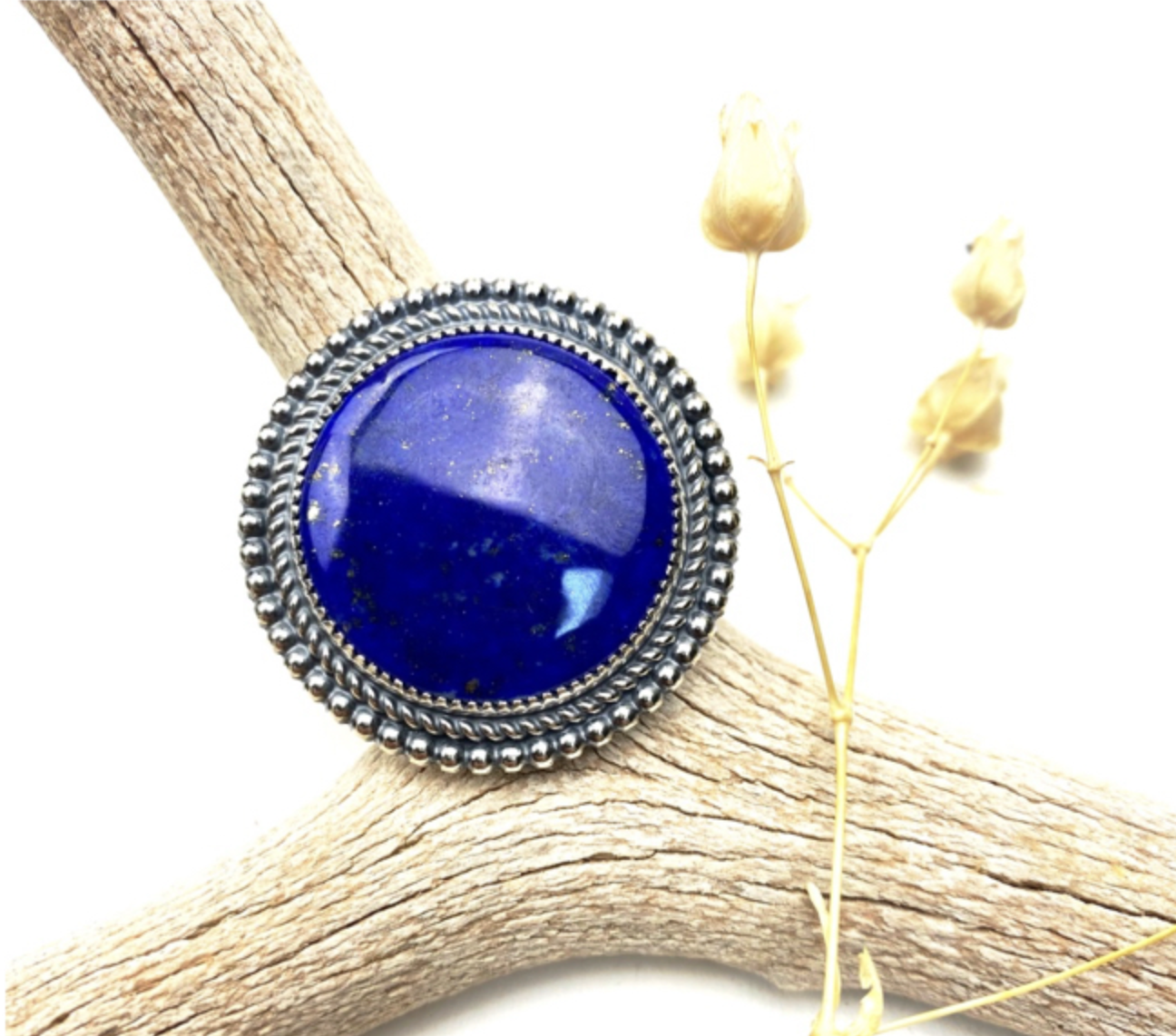
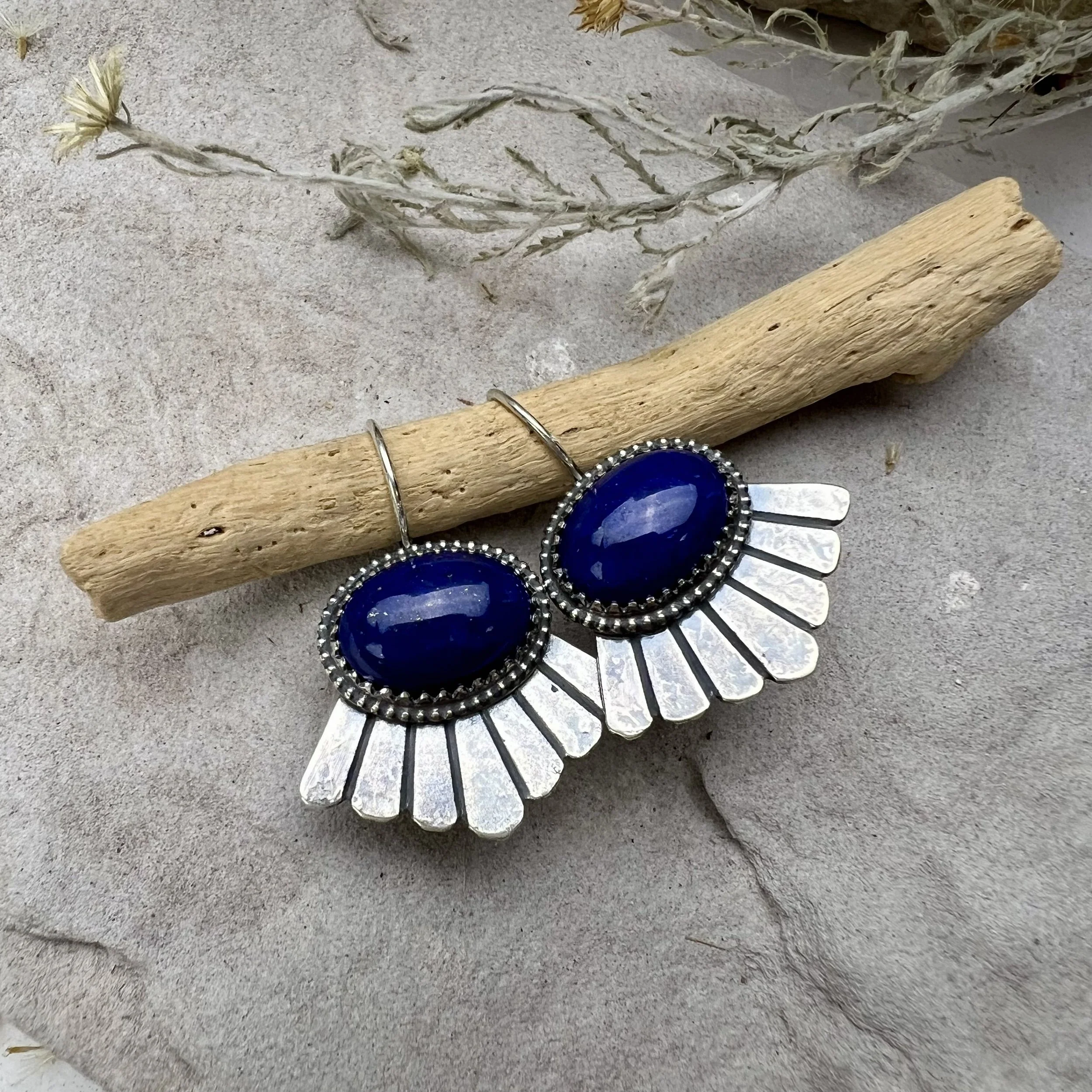
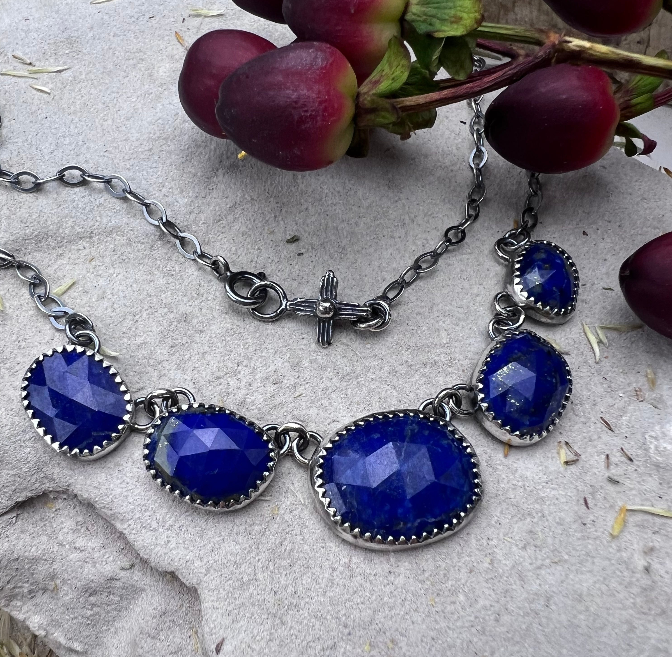
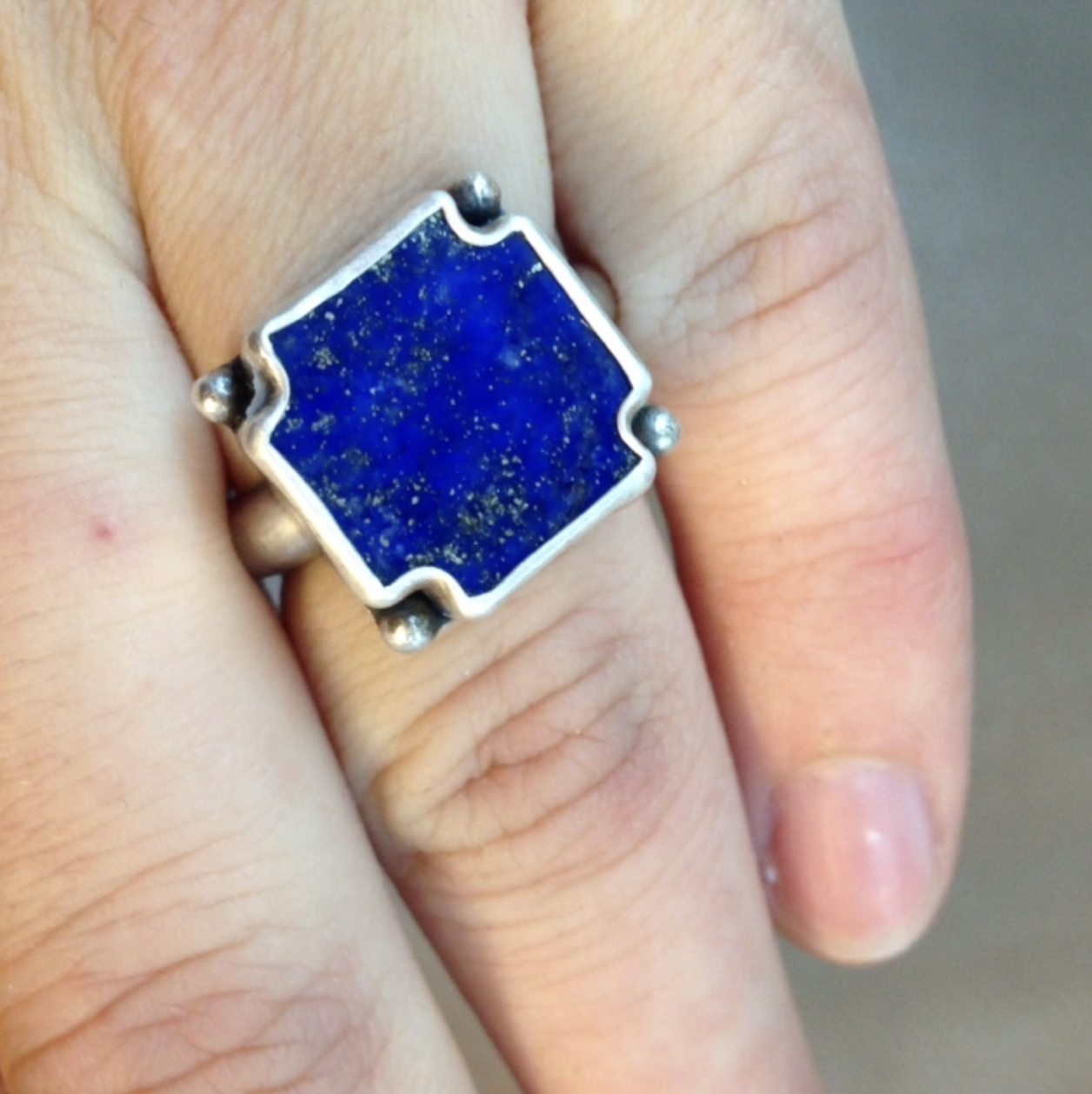
Lapis lazuli is recognized as an alternative September birthstone and has a completely different look and character from sapphire. Instead of transparency and faceted sparkle, lapis is known for its rich blue color, natural variations, white calcite, and metallic gold-colored pyrite.
No two pieces look exactly alike, which is part of what makes lapis so interesting to jewelry makers.
What Is Lapis Lazuli?
Lapis lazuli is not a single mineral. It is a rock made up of several minerals, primarily blue lazurite, with varying amounts of white calcite and metallic, gold-colored pyrite.
Those ingredients create the distinctive appearance of lapis.
One piece may be an almost uninterrupted deep blue. Another may have tiny flecks of pyrite scattered across the surface. Others may contain white calcite lines, subtle variations in color, or shades ranging from denim blue to deep indigo.
Unlike a transparent faceted gemstone, lapis does not depend on light passing through the stone to show its beauty. Its character is visible right on the surface through its color, pattern, and natural mineral inclusions.
What Makes Lapis Lazuli Special?
One of the most appealing things about lapis is that its natural variations become part of the stone's personality.
The Gemological Institute of America notes that highly valued lapis generally has an intense, uniform medium-to-dark blue or violetish-blue color. Small, attractively scattered pyrite flecks do not necessarily reduce its value, while visible white calcite is generally less desirable in traditional grading.
For a jewelry maker, however, traditional grading is only part of the story.
A stone with an unusual vein of calcite, an interesting arrangement of pyrite, or a noticeable shift in blue might be exactly what a maker is looking for. Instead of hiding those characteristics, a designer can use them to determine how the stone should be positioned and what kind of jewelry it should become.
That is one of the pleasures of working with natural materials: the stone itself contributes to the design.
Lapis Lazuli and Handmade Jewelry
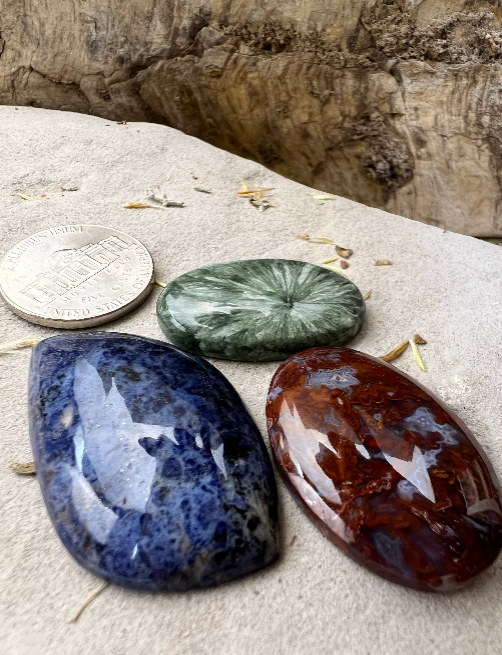
Lapis is often shaped into cabochons, which have smooth, polished surfaces rather than faceted cuts. It can also be used for beads, inlay, tablets, carvings, and freeform shapes.
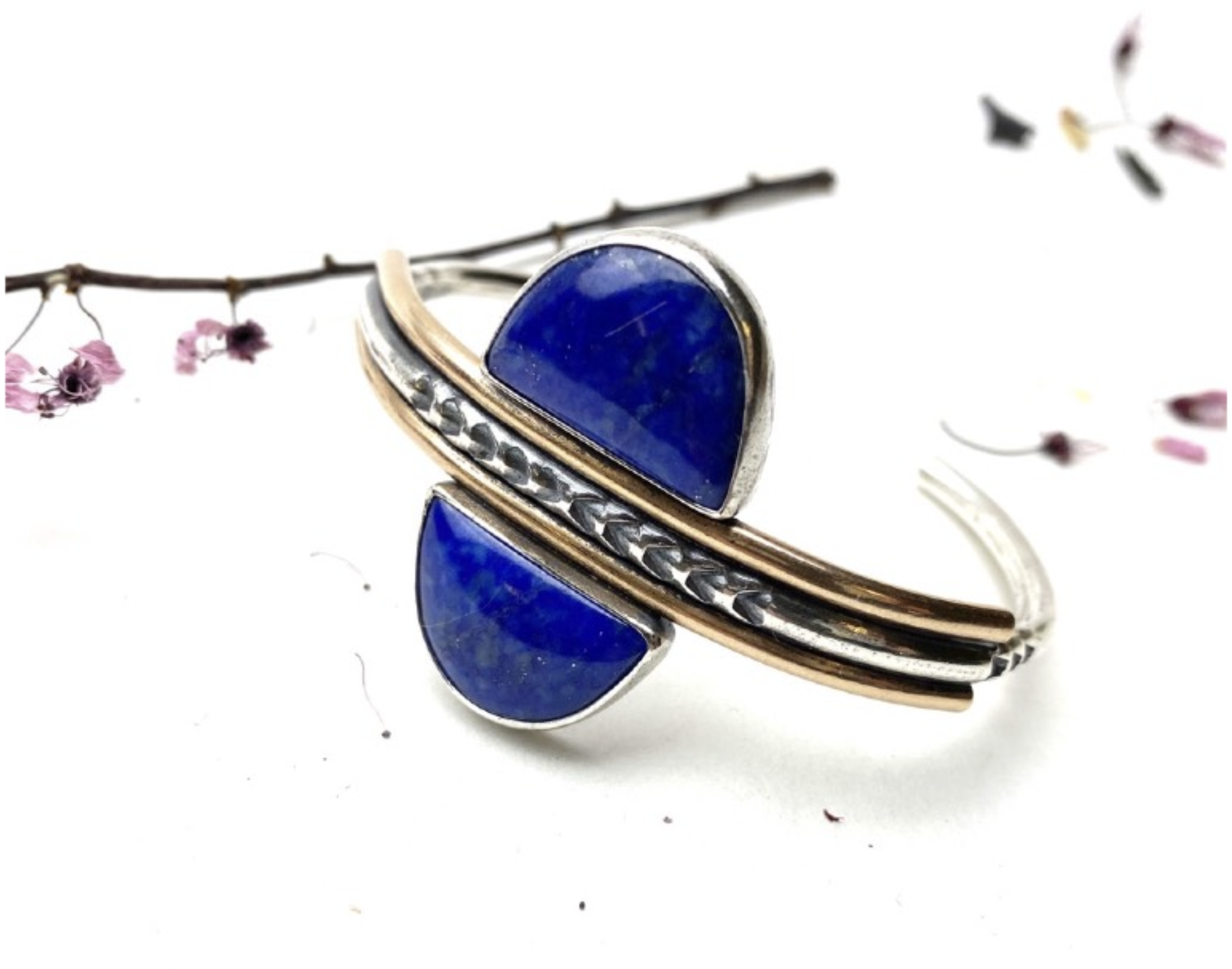
Its deep, opaque blue pairs especially well with sterling silver.
A simple bezel can frame the stone without distracting from it. Oxidized silver can complement the darker tones in the lapis, while a brushed or hammered finish can add texture to the metal.
Because lapis already has so much natural character, a jewelry design does not necessarily need to be complicated.
Sometimes the strongest design is a beautiful stone, a clean silver border, and enough space for the natural pattern to stand out.
How Do Jewelers Choose a Piece of Lapis?
Choosing lapis is about more than finding the darkest blue stone.
A jeweler looks at the entire piece and considers how its natural characteristics will work with the finished design.
They may ask:
Is the blue warm, cool, violet, or slightly green?
Is the color even, softly mottled, or dramatically varied?
Are the pyrite flecks subtle or prominent?
Does the calcite create an interesting pattern?
Where should the stone be cut to preserve its strongest visual area?
Would the finished stone work best as a ring, pendant, cuff, earrings, or another piece?
These decisions depend on both the rough stone and the jewelry being designed.
In lapidary, the maker studies the rough material before cutting. Even a small change in where the stone is marked can affect the appearance of the finished cabochon. The goal is not simply to produce a standard shape. It is to find the strongest composition within the material.
From Rough Lapis to a Finished Cabochon
Turning rough lapis into a finished cabochon is a gradual process.
The maker begins by studying the rough and marking the desired shape. Excess material is trimmed away, then the stone is shaped into a smooth dome. From there, it moves through progressively finer stages of sanding before being polished.
As the surface develops, details in the stone can become more visible. The blue becomes more defined, pyrite catches the light, and patterns that were subtle in the rough can become much more noticeable.
This is part of what makes lapidary so engaging. You are not simply applying a design to a blank material. You are studying the stone, making decisions, and gradually revealing what is already there.
If you are interested in learning more about working with natural stones, explore Meltdown Studio'sjewelry-making and lapidary classes in Albuquerque.
How to Care for Lapis Lazuli Jewelry
Lapis is softer than sapphire and generally measures between 5 and 6 on the Mohs hardness scale, depending on its composition. That means it can be worn and enjoyed, but it benefits from thoughtful care and an appropriate setting.
To care for lapis jewelry:
Store it separately from harder gemstones that could scratch it.
Avoid harsh chemicals and abrasive cleaners.
Clean it gently with warm, soapy water and a soft cloth.
Avoid steam and ultrasonic cleaning.
Remove lapis jewelry before activities where it could experience hard impacts.
Some lapis is dyed or treated with wax or oil to improve its color or luster. Heat and solvents can damage treated surfaces, so gentle cleaning is the safest approach. TheGemological Institute of America’s lapis lazuli guide has additional information about lapis quality, treatments, and care.
Is Lapis Lazuli a September Birthstone?
Sapphire is the official modern September birthstone in the United States, while lapis lazuli is recognized by the International Colored Gemstone Association as an alternative September birthstone. Birthstone traditions can vary, so it is helpful to describe lapis as an alternative rather than the official September stone.
For someone shopping for or making September birthstone jewelry, that opens up another possibility.
A September birthday does not have to mean choosing a traditional blue sapphire. Lapis offers a completely different combination of deep color, natural pattern, and mineral character.
And, of course, birthstones do not have to dictate what you wear. Turquoise, jasper, moonstone, or another stone may be the one that feels right to you.
Gemstones as a Shared Creative Experience
Choosing a stone can also be part of the experience of making jewelry.
When a group works with natural materials, everyone can start with the same general project while making individual decisions about color, shape, pattern, and design. The process becomes collaborative without being competitive.
That can make gemstone jewelry a natural fit for a private workshop or creative team experience. Participants learn together, work at the same benches, and still have the freedom to create something that feels personal.
Meltdown Studio offersprivate jewelry-making events in Albuquerque for friends, families, celebrations, and corporate teams. Available projects vary, so groups can contact the studio to discuss the right experience for their event.
Find Your Stone at Meltdown Studio
Learning to work with gemstones can change the way you see them.
You start noticing the shape of rough material, the direction of a vein, the difference between a polished and unfinished surface, and the possibilities hidden inside a piece of stone.
Whether you are drawn to lapis lazuli, sapphire, turquoise, jasper, or something unexpected, learning to work with natural materials gives you a different appreciation for the finished jewelry.
Explore current jewelry-making classes in Albuquerque and find a place to begin.
Frequently Asked Questions
What is September's official birthstone?
Sapphire is the official modern September birthstone in the United States.
Is lapis lazuli a September birthstone?
Yes. Lapis lazuli is recognized by the International Colored Gemstone Association as an alternative September birthstone.
What are the gold-colored flecks in lapis lazuli?
The metallic gold-colored flecks commonly found in lapis are pyrite, a natural mineral within the rock. They are not gold.
What are the white areas in lapis?
White lines or patches in lapis are generally calcite. The amount and placement of calcite can affect the stone's appearance and traditional market value.
Can lapis lazuli be worn every day?
Lapis can be used in everyday jewelry, but it is softer than sapphire and can be scratched by harder materials. Protective settings and thoughtful care are especially important for rings and bracelets.